The successful launch of the European Space Agency's HydroGNSS mission marks a significant milestone for UK space science—thanks in large part to the exceptional contributions of Space South Central's leading organisations. The two HydroGNSS satellites, designed and constructed in Guildford by Surrey Satellite Technology Ltd (SSTL), launched on Friday aboard a SpaceX Falcon 9 rocket from Vandenberg Space Force Base in California, showcasing the thriving innovation ecosystem in the UK's south.
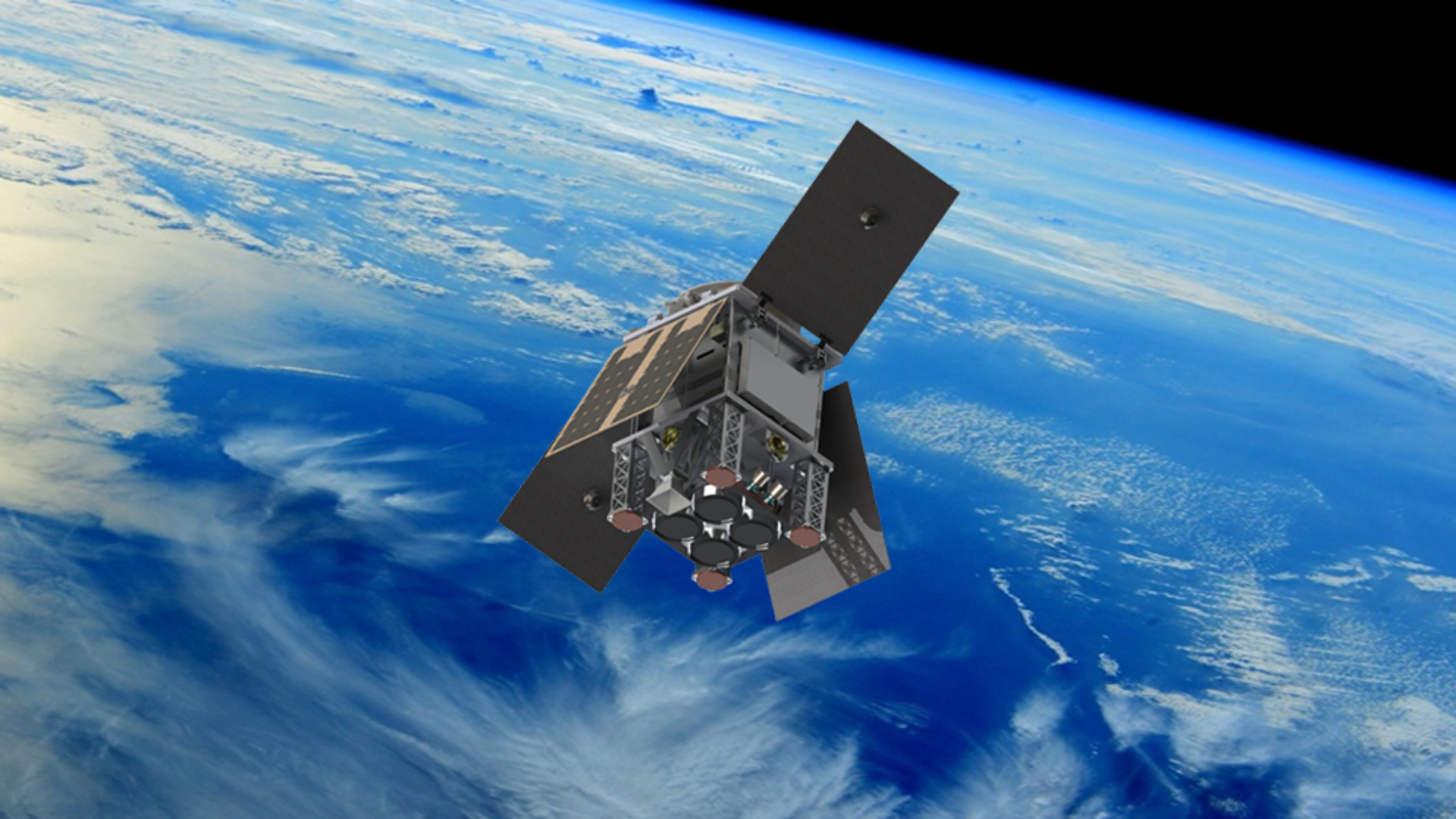
Image credit: ESA
Regional Powerhouses at the Helm
This mission, part of the European Space Agency's Scout Programme, exemplifies the power of collaborative engineering. SSTL's expertise was complemented by the precision engineering of EECL, another Space South Central company, whose team designed, tested, and delivered key flight hardware, conducted environmental testing, and provided expert support.
The region's strength also extends to academia. Beyond engineering, the University of Surrey has provided deep scientific leadership through decades of pioneering research in GNSS reflectometry technology. Early work by Surrey Space Centre researchers, including the first use of GPS signals on a small satellite in the 1990s, laid the foundation for the innovative techniques now deployed by HydroGNSS. Dr Martin Unwin, who completed his PhD at Surrey in 1995, now serves as the Industrial Principal Investigator for HydroGNSS and heads the mission's Science Advisory Group. Together, these partners demonstrate the powerful synergy between local industry and academia.
Maximising Science, Minimising Cost
HydroGNSS was made possible through a €30 million UK Space Agency investment via ESA's FutureEO programme, ensuring that the UK's approach to satellite Earth observation remains not only advanced but also cost-effective. In orbit, the satellites operate 180 degrees apart, leveraging engineering brilliance to map global water variables using revolutionary GNSS reflectometry, a critical tool for agriculture, flood prediction, and climate science.
How HydroGNSS Works
Operating in a sun-synchronous orbit at 550km altitude, the two satellites will harness reflected signals from GPS and Galileo navigation satellites to measure Earth's water systems. The mission employs a revolutionary technique called GNSS reflectometry (GNSS-R), which uses L-band microwave signals bounced off the Earth's surface to extract information about geophysical parameters. This low-cost, highly effective approach enables unprecedented global coverage—the entire Earth in just 15 days, and through clouds at any time of day or night..
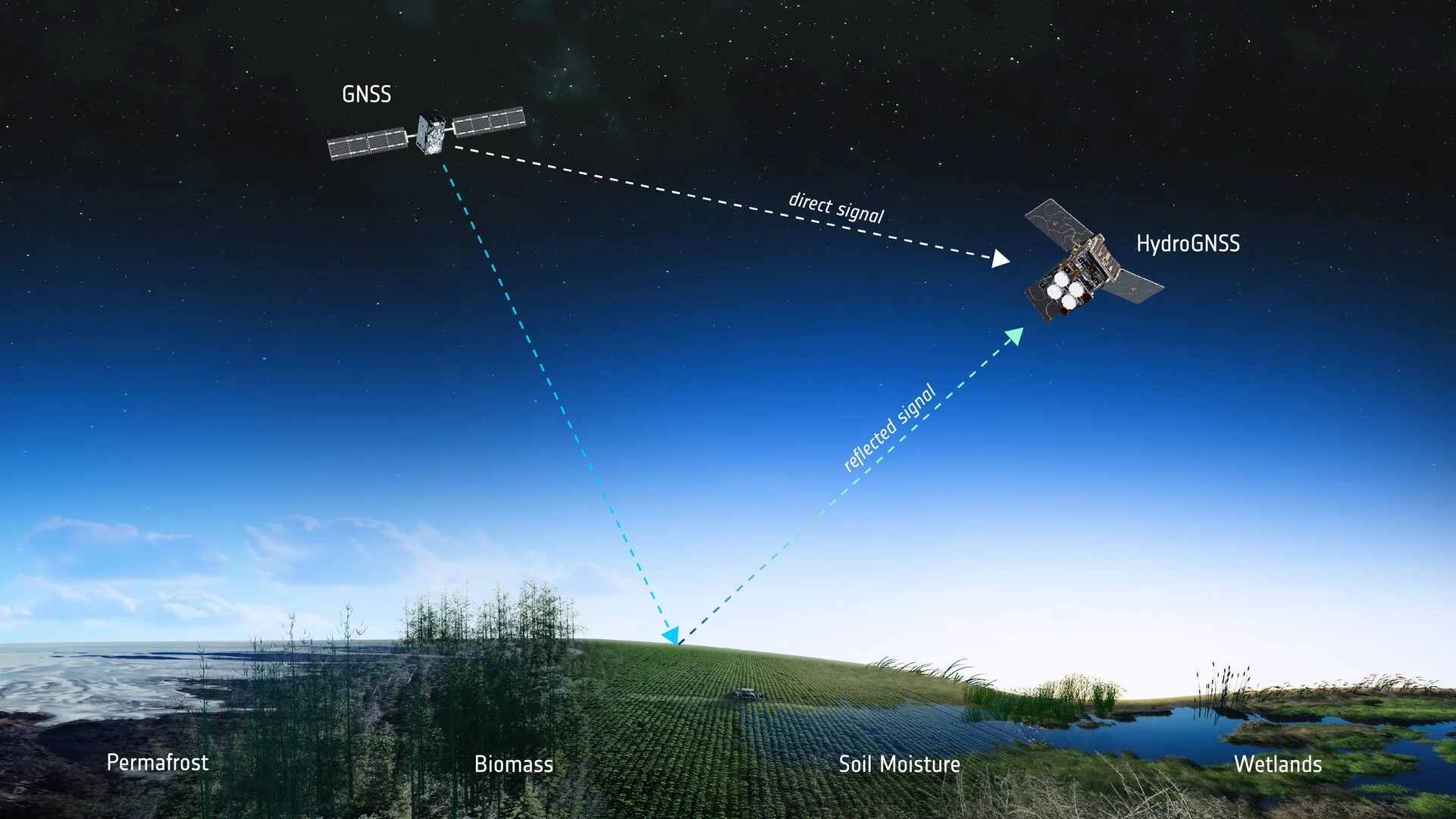
Image credit: ESA
Regional Science, Global Impact
At the heart of the mission's science stands the National Oceanography Centre (NOC), a major regional asset. NOC leads the calibration of ocean-based satellite data and processes advanced wind speed and ice measurements, ensuring HydroGNSS's findings are world-class and reliable for the scientific community.
Developing the Next Generation of Space Innovators
Two PhD students from the University of Surrey played an important role in the HydroGNSS project, showcasing how academic partnerships are shaping the future of the space sector. Abi Yetton, based at the Surrey Space Centre, and Tommy Richards, from the Advanced Technology Institute, both contributed their expertise while pursuing research supported by Surrey Satellite Technology Ltd (SSTL).
Abi focused on designing the process for handling and interpreting raw satellite data, a critical step in turning measurements into actionable insights. Tommy worked on testing the solar panels that power the satellites, ensuring reliability in challenging space environments.
Their involvement highlights the importance of engaging talented researchers in real-world missions, providing hands-on experience that not only advances cutting-edge projects but also inspires the next generation of space professionals. By connecting academia and industry, initiatives like HydroGNSS create a pipeline of skilled innovators ready to tackle future challenges in Earth observation and beyond.
A New Regional Era for Space
HydroGNSS is more than a technical achievement; it is proof that UK regional partnerships can deliver world-first missions with meaningful impacts for climate research and society. By combining the innovation of SSTL, EECL, the University of Surrey, and the National Oceanography Centre, Space South Central cements its status as a powerhouse in the era of space for Earth—making significant contributions to our understanding of wetlands, permafrost dynamics, and forest carbon storage.