
UK Space Agency CEO Engages with Regional Innovation During Southampton visit
Dr Paul Bate explores cutting-edge facilities and meets growing SMEs, reinforcing Space South Central's role in national space endeavour
Dr Paul Bate, Chief Executive of the UK Space Agency, spent Friday, 12 December visiting the Space South Central region for an intensive day of engagement showcasing the area's thriving space ecosystem. The visit highlighted the strategic importance of a cluster that contributes nearly 20% of UK space industry revenue and employs over 14,000 professionals across one of the nation's most dynamic space regions.
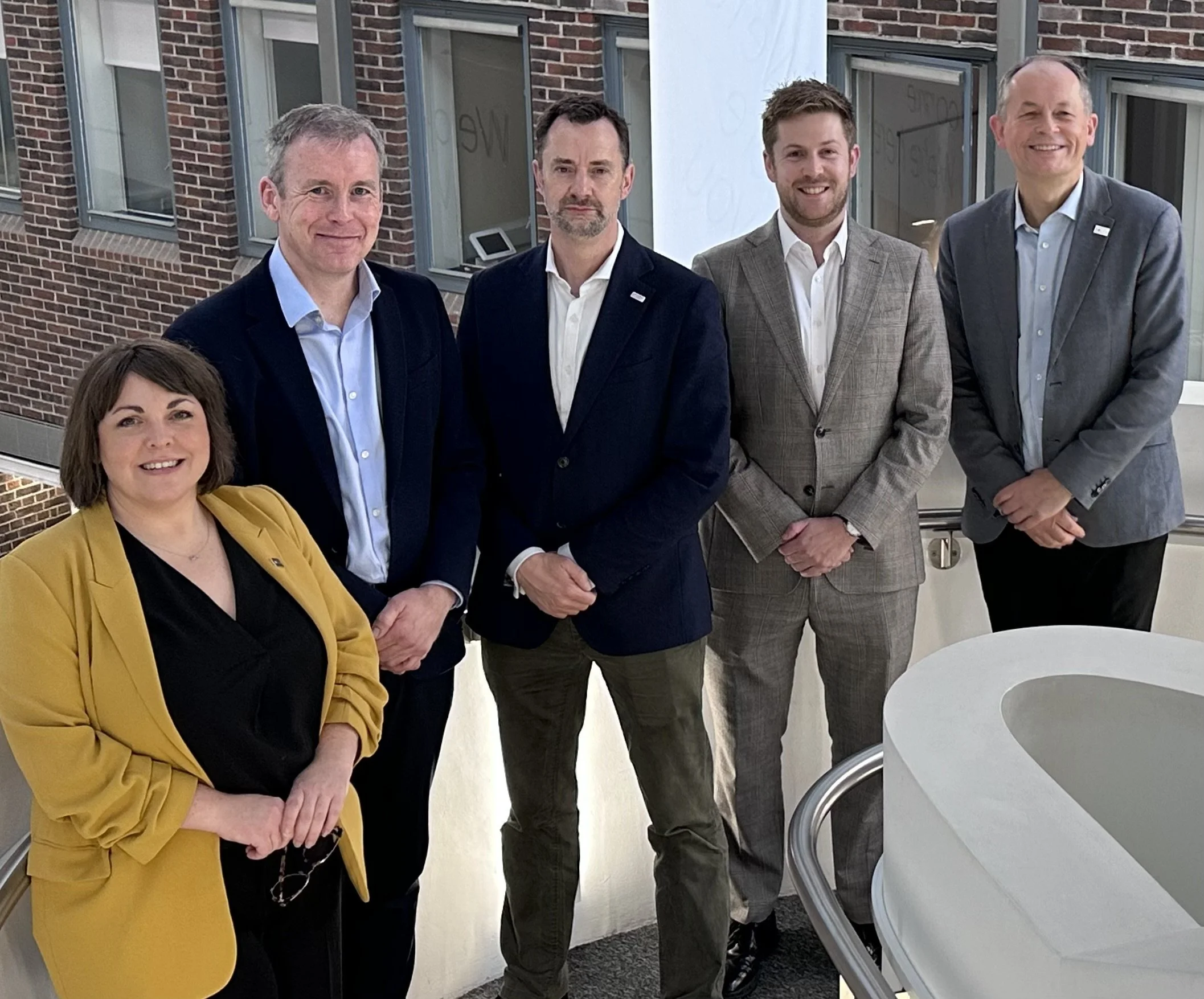
Left to Right: Dr Louise Butt (Space South Central), Professor Mark Sullivan (University of Southampton), Dr Paul Bate (UK Space Agency), Jon Hulks (UK Space Agency) and Professor David Parker (Visiting Professor University of Southampton).
Hosted by Space South Central at the University of Southampton's Highfield Campus and Chilworth Science Park, the visit demonstrated the depth and breadth of capabilities that have positioned the south-central region as a cornerstone of Britain's space sector, a region whose influence has shaped national space success for more than seventy years.
Showcasing Academic Excellence
The morning programme featured an impressive tour of Southampton's cutting-edge space facilities. Dr Louise Butt, Director of Space South Central, introduced the cluster's role in fostering collaboration, catalysing investment, and showcasing UK capabilities internationally. These are key pillars that align directly with the National Space Strategy.
This vision came to life as Dr Bate visited facilities demonstrating the region's world-leading capabilities in photonics and quantum technologies, areas where Southampton researchers and industry partners are pushing the boundaries of what's possible in space.
The tour began at the Optoelectronics Research Centre (ORC), where Southampton's world-renowned photonics capabilities were on display. The ORC has contributed significantly to communications technology that underpins the internet, as well as developing advanced laser technologies, photonic circuits and sensors with applications spanning telecommunications, manufacturing, medicine and defence.
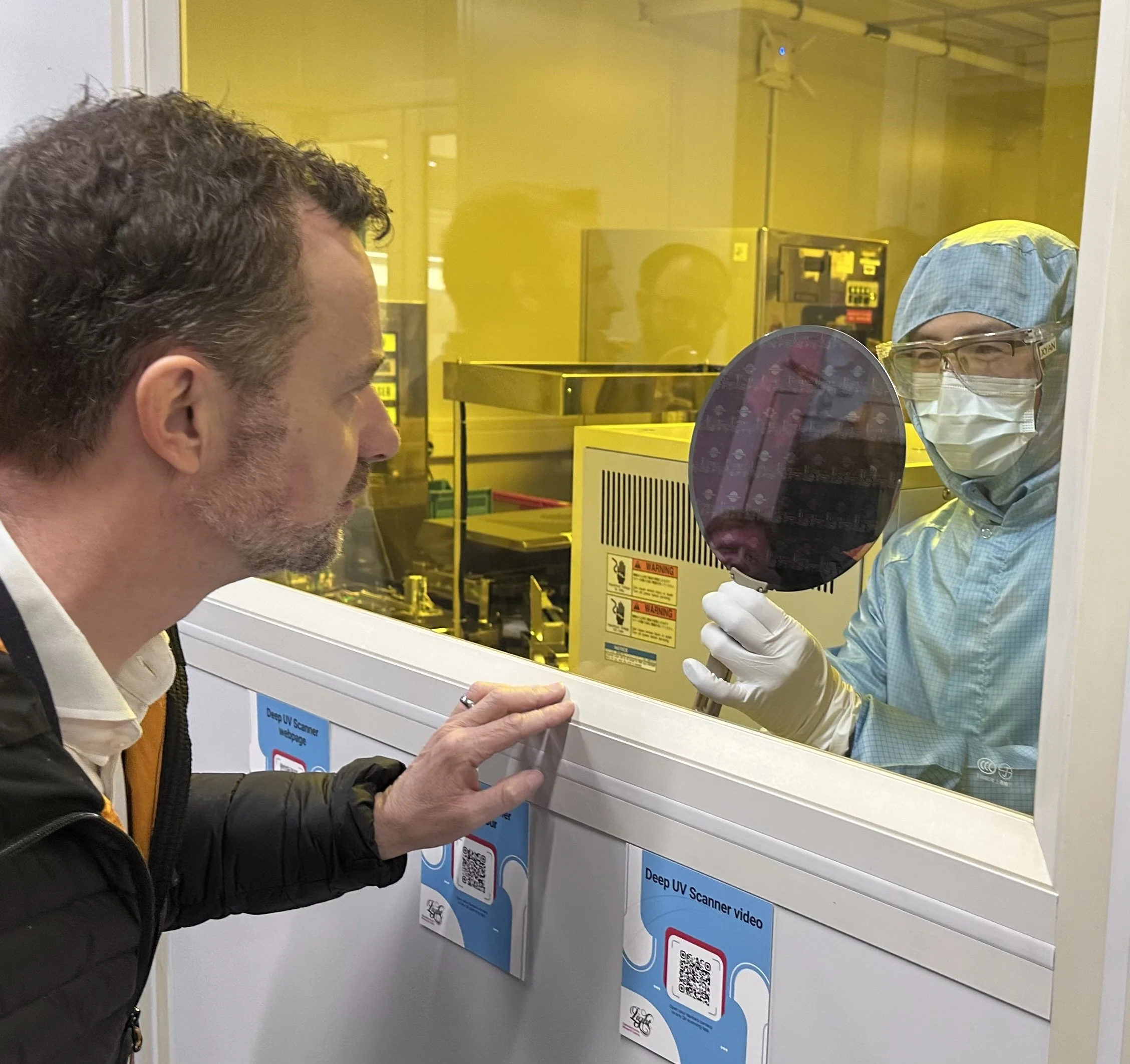
Dr Paul Bate at the Optoelectronics Research Centre.
Professor Hendrik Ulbricht then led Dr Bate through Southampton's Space Quantum Laboratory, demonstrating pioneering research in quantum technologies for space applications. The facility is developing levitated mechanical sensors to test for low-mass Dark Matter in space, representing a significant step forward in fundamental physics experiments conducted in orbit.
A highlight of the academic programme was the presentation of JUPITER, the Joint Universities Programme for In-Orbit Training, Education and Research, a groundbreaking collaboration between Surrey, Portsmouth, and Southampton universities that is equipping students with hands-on satellite mission experience. Professor Adam Amara, who serves as both Chief Scientist to the UK Space Agency and Director of the Surrey Space Institute, was among the academic leaders present, emphasising the programme's role in addressing the UK's critical space skills gap.
Industry Roundtable: Real Challenges, Regional Solutions
The afternoon shifted to a candid industry roundtable at Chilworth Science Park, where Dr Bate and Dr Butt engaged six regional SMEs on the practical barriers they face scaling space businesses. The discussion centred on access to affordable testing facilities, achieving crucial flight heritage, navigating emerging data security regulations, and managing cash flow pressures inherent in the capital-intensive space sector.
The roundtable companies exemplified diverse pathways forward. Ohm Space, a University of Southampton spinout, is commercializing revolutionary resistojet propulsion technology developed through eight years of academic research. AccelerComm, another Southampton spinout, has advanced error-resilient 5G solutions for satellite communications that deliver 30-times performance improvement for LEO applications. Aquarius Test Engineering, founded in 2024, addresses critical semiconductor testing needs for aerospace, while Multiple Access Communications brings 40 years of satellite communications heritage to emerging connectivity challenges. EOS Space Technology described their advanced Hall thruster technology and Sirius Analysis demonstrated the growing importance of specialized analytical capabilities for complex space systems.
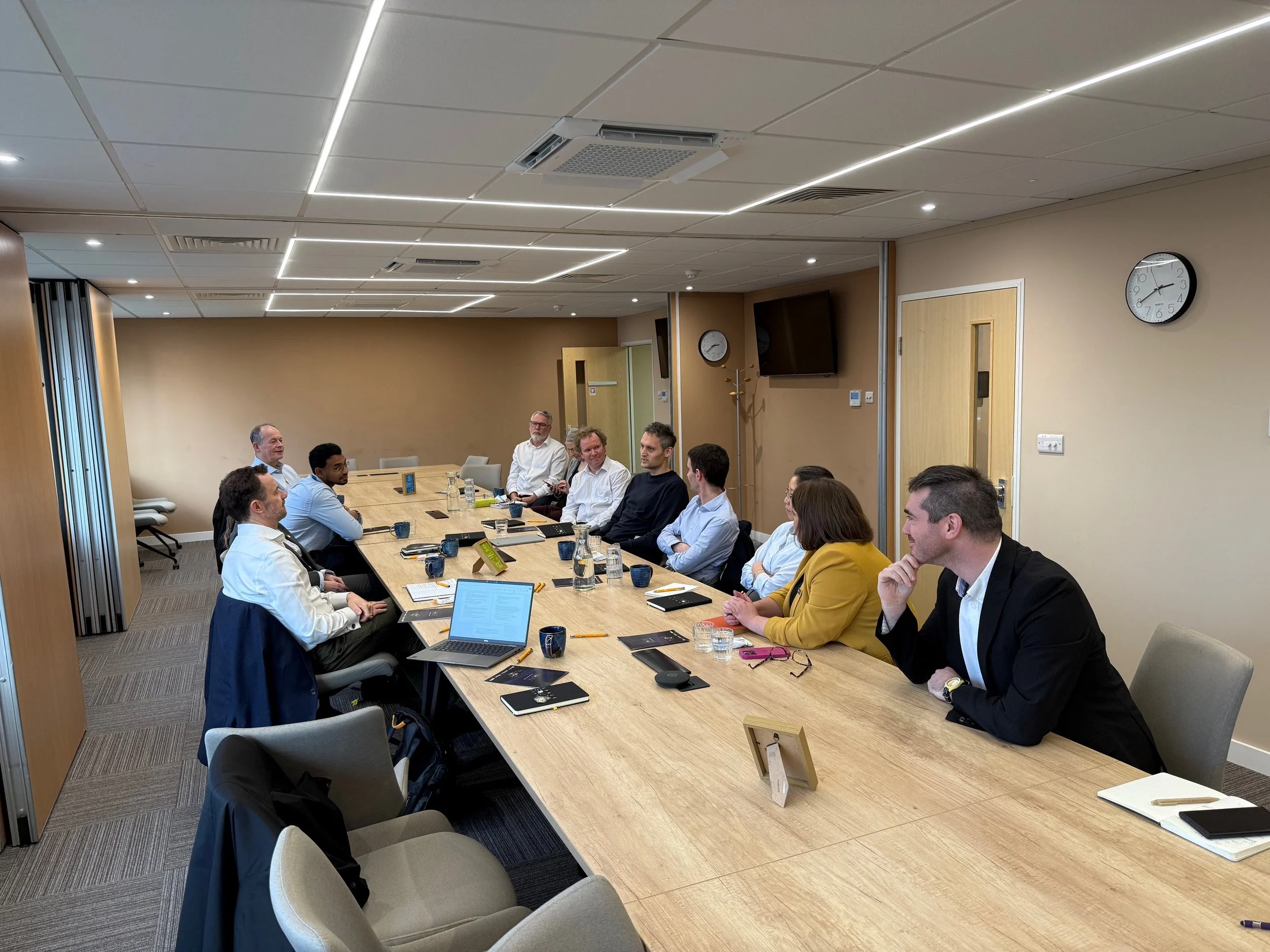
Companies who attended the round table include: Ohm Space, Sirius Analysis, Aquarius Test Engineering, Multiple Access Communications, EOS Space Technologies, and AccelerComm.
The discussion underscored how regional innovation infrastructure, including university partnerships, shared facilities, and programmes like the University of Surrey's SpaceCraft initiative, prove decisive in helping companies navigate challenges and bridge the gap from concept to operational success. Universities play a particularly vital role: the University of Southampton alone has formed more than 90 spinout ventures since 2000, raising more than £47 million in equity investment in 2023/24.
Strategic UK Space Agency Investment
Dr Bate's visit comes during a period of significant momentum for Space South Central, driven by substantial UK Space Agency investment supporting regional innovation and growth.
In early December 2025, the UK Space Agency announced £17 million in funding through its National Space Innovation Programme (NSIP) for seventeen groundbreaking UK space projects spanning space domain awareness, in-orbit servicing and manufacturing, Earth observation, satellite communications, and position, navigation and timing. Notably, University of Southampton received £800,000 through NSIP in partnership with Cranfield Plasma Solutions to develop a plasma torch system for simulating extreme thermal conditions of spacecraft atmospheric re-entry. Additionally, ProtoLaunch Ltd, partnered with University of Southampton and Naicker Scientific Ltd, received £1 million to develop a water-based propulsion system for sustainable satellite movement.
Earlier in July 2025, Space South Central itself received £160,000 as part of a £1.6 million UKSA investment distributed to ten UK space clusters, supporting regional economic development, international partnerships, and skills initiatives through March 2026.
The region also celebrated a significant milestone in November 2025 with the successful launch of HydroGNSS, a pioneering twin-satellite Earth observation mission designed and built by Surrey Satellite Technology Ltd (SSTL) in Guildford with £26 million in UK Space Agency funding. The mission, which launched on 28 November aboard a SpaceX Falcon 9 rocket, represents the first mission under the European Space Agency's Scout programme.
HydroGNSS will monitor the planet's water cycle from space by using GNSS Reflectometry to detect water movement, soil moisture, frozen terrain, and vegetation coverage. The mission exemplifies regional collaboration: SSTL designed and built the satellites, the University of Surrey provided decades of foundational research in GNSS reflectometry technology with two PhD students contributing expertise, and the National Oceanography Centre leads calibration of ocean-based satellite data and processes advanced wind speed and ice measurements.
Strategic Regional Assets
The cluster now represents over 300 organisations across four world-class universities: Portsmouth, Southampton, Surrey, and UCL, following UCL's addition in July 2024, which extended the cluster's reach into London's academic and business networks. The region generates more than £2.8 billion in space-related income annually, with £1.1 billion in export revenue and £65 million in foreign direct investment.
These figures reflect capabilities spanning satellite manufacturing, next-generation communications, autonomous systems, and secure space software, strengths amplified by world-class aerospace and defence expertise from embedded industry leaders including Lockheed Martin, Boeing, and Airbus. The Solent Freeport adds another strategic dimension, providing market access and accelerating international trade and investment as a key maritime gateway.
Recent international investments include Ramon.Space, which established its first European office and UK engineering hub at Surrey Research Park in 2024, and Circuits Integrated, a Greek semiconductor design specialist that established its first UK presence at Surrey Research Park to develop next-generation satellite chipsets. Five Space South Central organisations shared £2.1 million in UKSA early-stage technology grants for Earth observation technologies in 2024, while the University of Portsmouth won £350,000 to launch Continuing Professional Development courses addressing the space industry skills gap.
Looking Ahead
As Dr Bate concluded his visit, the day's activities reinforced Space South Central's position as the engine that powers UK leadership in space innovation, sustainability, and global competitiveness. The combination of academic excellence, innovative SMEs, substantial government investment, strategic infrastructure, and collaborative ecosystem exemplifies the National Space Strategy's vision for fostering collaboration and catalysing investment.
With the UK Space Agency's budget uplift of 8% from April 2026 and its multifaceted funding approach, from cluster support and NSIP awards to major mission investments like HydroGNSS, alongside innovation infrastructure like SpaceCraft, sustained commitment to helping companies overcome growth barriers is clear. Dr Bate's visit demonstrated that from quantum laboratories to satellite ground stations, from plasma propulsion to 5G satellite networks, the south-central region continues to deliver across almost every recognised UK space capability, cementing its role as the cornerstone of the nation's space sector for decades to come.
Dr Paul Bate, Chief Executive of the UK Space Agency, said:
“Space South Central is one of the nation’s leading space clusters, home to world-class universities and a diverse industrial supply chain. During my visit, it was great to see the region’s academic strengths, particularly in quantum technologies, astrophysics and electric propulsion at the University of Southampton, and to hear how the cluster is unlocking investment and competing on the international stage. The UK Space Agency will continue to support these partnerships, which convert excellent research into new capabilities, jobs and economic growth for the UK.”